How Much Is My Mechanical Keyboard Collection Worth? A Practical Guide
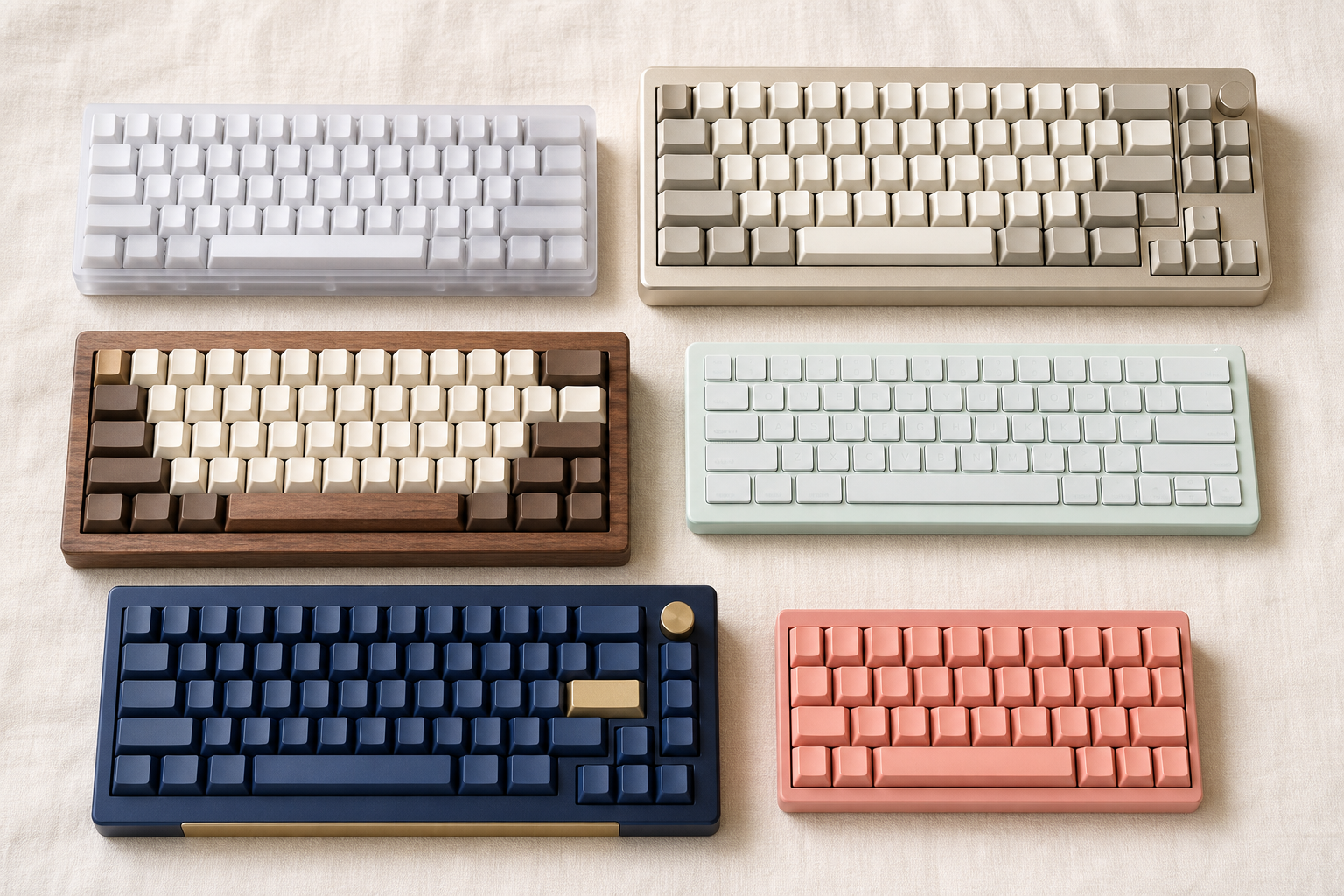
If you've been in the hobby for more than a year, you've probably lost track. A board here, a group buy keycap set there, a couple of artisans you swore you'd never sell. Individually you remember roughly what you paid. As a collection? No idea.
That's not a personal failing — it's structural. Unlike Pokémon cards or watches, mechanical keyboards have no clean pricing index. Value is scattered across sold listings, Discord trades, and group buy spreadsheets that may be years old. So most collectors either lowball their collection out of habit or wildly overestimate it based on what they paid, which is often not what it's worth today.
Here's how to actually think about it.
Value lives in four places
When you value a build, break it into its parts. A single "keyboard" is really a stack of independently tradable components:
- The board / kit (case, PCB, plate). This is usually the biggest single line item, and the one that depreciates fastest if it's still in production.
- Switches. Often overlooked. A set of sought-after or discontinued switches can be worth more than the board they're sitting in.
- Keycaps. For many collectors this is where the real money hides — especially discontinued GMK or limited sets.
- Artisans, stabilizers and mods. Small in count, occasionally huge in value. A single rare artisan can outweigh everything else.
The mistake is valuing "the keyboard" as one object. The market values the parts.
In-production vs discontinued: the single most important distinction
This is the rule that changes everything:
- In-production gear depreciates. If you can still buy it new today, your used copy is worth less than retail — usually meaningfully less. This covers most mainstream boards, switches and restockable keycaps.
- Discontinued gear can hold or gain value. Once a group buy closes and there's no re-run, scarcity takes over. Sought-after discontinued keycap sets and artisans are the part of the hobby that actually behaves like an asset.
So two builds that cost the same new can be worth wildly different amounts a year later, purely based on what's still purchasable.
Condition is a multiplier, not a footnote
The same item in "new/sealed" vs "used, shine on the legends" can differ by 30% or more. Be honest with yourself when estimating: sealed and unused commands a premium, visible wear (keycap shine, case scratches, yellowing) drags the number down. Treat condition as a multiplier applied to a baseline value, not an afterthought.
How to actually estimate a number
There's no magic API, so you triangulate from three sources, in order of reliability:
- Recent sold comps. What did the same item actually sell for recently? Sold listings (e.g. the "sold" flair on r/mechmarket) are the gold standard because they reflect real transactions, not wishful asking prices.
- Active listings, discounted. If nothing sold recently, look at what people are asking — then knock 15–20% off. Asks are aspirational; real sales land lower.
- Retail or original group-buy price as a floor. For in-production items, retail minus a used discount. For discontinued items with no comps, the original group buy price is a rough floor, not a ceiling.
If you have none of the above for an item, fall back to a category heuristic and flag it as low confidence.
Why you should produce a range, not a single number
A collection valued at "€2,437.12" is fake precision. The secondhand market is too noisy for that. A far more honest — and more defensible — output is a range with a confidence level: "around €2,400, somewhere between €1,900 and €2,900." Each item carries its own confidence (high if you have sold comps, low if you're guessing), and the collection total inherits a band.
This isn't a weakness. It's the correct way to value an illiquid market, and it stops you from making bad decisions based on a number that was never real.
Do it automatically
Valuing a full collection by hand means tracking sold comps across Reddit, Discord and old spreadsheets for every single item — for a sizeable collection that's hours of work that goes stale the moment you finish.
That's exactly what KeebVault is built to do: catalog every board, switch set, keycap set and artisan you own, and get a running collection value with a confidence range that updates as the community's pricing data grows. Track your collection for free and stop guessing.
Want to know which keycaps actually hold their value? Read GMK Keycaps Resale Value. Wondering if any of this counts as an investment? See Are Mechanical Keyboards a Good Investment?