GMK Keycaps Resale Value: Which Sets Hold Their Worth
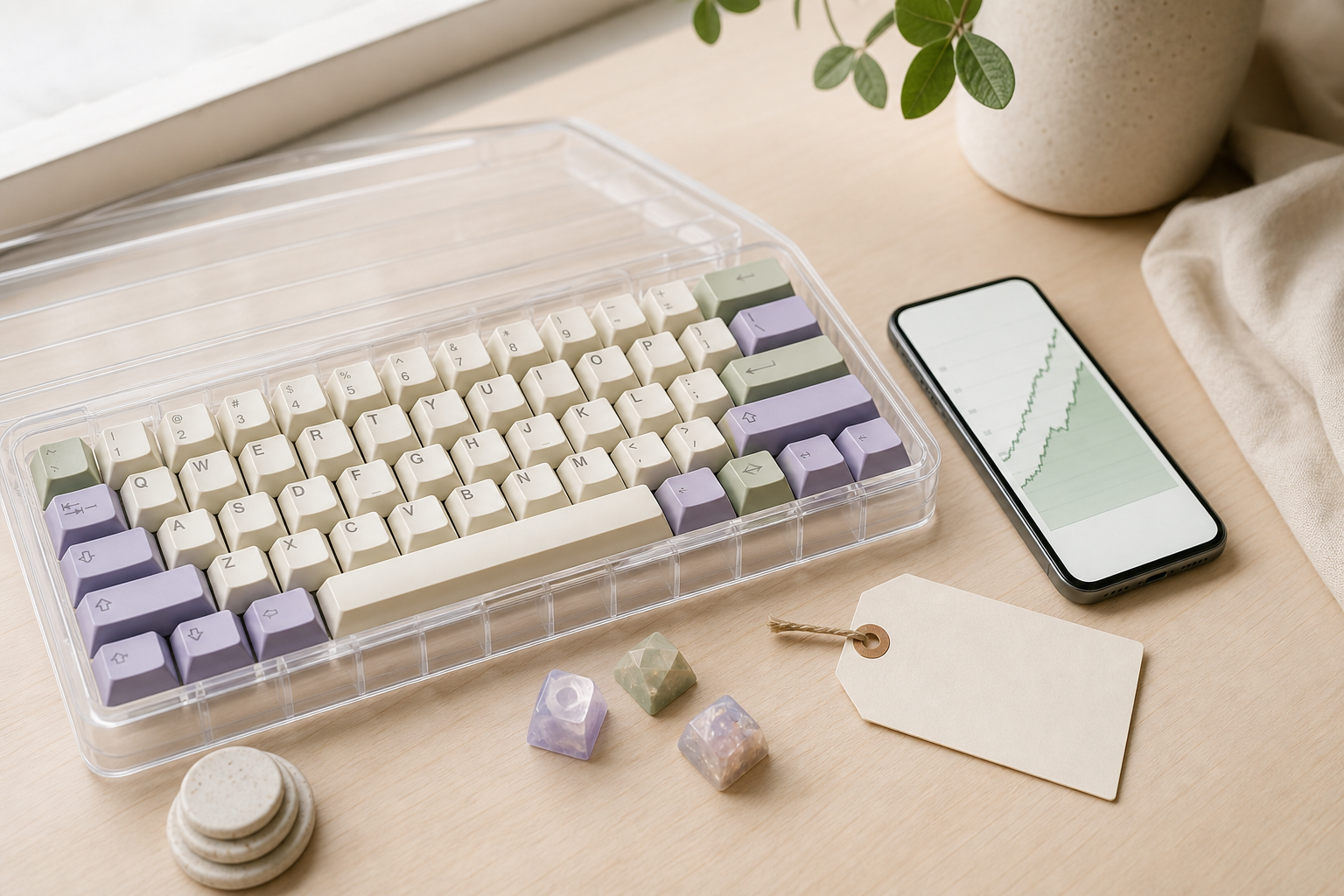
GMK keycaps are, for a lot of collectors, the single most "investment-like" category in the hobby. Doubleshot ABS, sold through limited group buys, and frequently never re-run — that combination is a recipe for scarcity. But "GMK" alone doesn't mean a set holds value. Plenty of sets sell below their group buy price on the secondhand market. Here's what actually separates the two.
Why GMK can appreciate at all
The mechanics come down to how these sets are sold. Most GMK sets run as group buys: a one-time order window, manufactured to demand, then closed. If a set is popular and never gets a second run, the only way to get it afterward is the secondhand market — and that's where scarcity pricing kicks in.
Two sets can launch at the same price and end up worlds apart: one fades and resells at a discount, the other becomes a chased grail. The difference is almost always demand outliving supply.
What drives a specific set's resale value
Scarcity and re-runs
The biggest factor. A set with no re-run and lasting demand is the classic appreciator. The moment a re-run is announced, secondhand prices for the original typically soften, because scarcity just got diluted.
Colorway and hype
Iconic, widely-loved colorways hold value far better than divisive ones. Sets that became "default recommendations" or hit a cultural nerve in the community tend to stay liquid and command premiums years later.
Kitting: base kit vs the extras
This is where collectors lose or make money. A set's value isn't one number:
- The base kit is the most liquid and most commonly traded.
- Novelties, spacebars and add-on kits are often produced in smaller numbers and can be worth disproportionately more per piece.
- A complete set with all kits carries a premium over a base-only set — sometimes a large one for desirable sets.
When you value GMK, value the kits you own, not just "the set."
Condition and completeness
Sealed and unused commands a premium. Used caps with shine, missing novelties, or a broken seal all pull the number down. Completeness matters as much as cosmetic condition — a set missing its novelties is worth less than the sum of its parts suggests.
The sets people chase
Without quoting prices that go stale by the week, certain GMK sets have a long-standing reputation as strong value holders — typically limited, never-re-run, iconic-colorway sets that the community has chased for years. Specific examples rotate as re-runs happen and tastes shift, so the durable lesson isn't a list of names: it's the pattern. Limited + no re-run + iconic colorway + complete and sealed = the profile of a set that holds or gains. The opposite profile resells at a loss.
For current numbers, always check recent sold comps rather than asking prices — asks run high, and re-run announcements can move a set's value overnight.
How to actually check a set's value
- Find recent sold listings for the exact set and kitting (not just asks).
- Adjust for your condition and completeness.
- Note whether a re-run has been announced — if so, expect softening.
- Record it, so you're tracking a trend and not a single data point.
That last step is the one most collectors skip, and it's the one that matters. A single sold price is noise; a set's value over time is signal.
Track it instead of guessing
If you own more than a handful of GMK sets, manually tracking sold comps per set and per kit is a real chore — and it's exactly the kind of data that decides whether you're holding grails or sets you should rotate out of.
KeebVault catalogs your keycap sets down to the kits you own, tracks what you paid versus current value, and shows your profit/loss as the community's pricing data grows. Track your keycaps for free and finally know which of your sets are actually worth holding.
New to valuing a collection? Start with How Much Is My Keyboard Collection Worth?. Wondering if any of this is a real investment? Read Are Mechanical Keyboards a Good Investment?